A Research Lab in Service of Its Customers
Graylark combines the rigor of defense research, the speed of Silicon Valley prototyping, and product design that makes advanced AI usable in the field.
Graylark describes itself as an applied AI research lab. We use that language deliberately.
We are not a software company that occasionally adds an AI feature, and we are not a research organization satisfied when an experiment produces an interesting result. We exist to take on difficult technical problems, discover what is newly possible, and turn that work into systems that people can actually use.
That last step changes how we think about everything before it.
The research question cannot be separated from the person facing the problem. The benchmark cannot be separated from the conditions in which the system will operate. The model cannot be separated from the interface that communicates its result. And a promising prototype cannot be mistaken for a dependable product.
Our operating model combines two traditions that are often treated as opposites: serious research and fast product iteration.
We believe the strongest applied AI companies will be built where those traditions meet.
Two traditions shaped Graylark
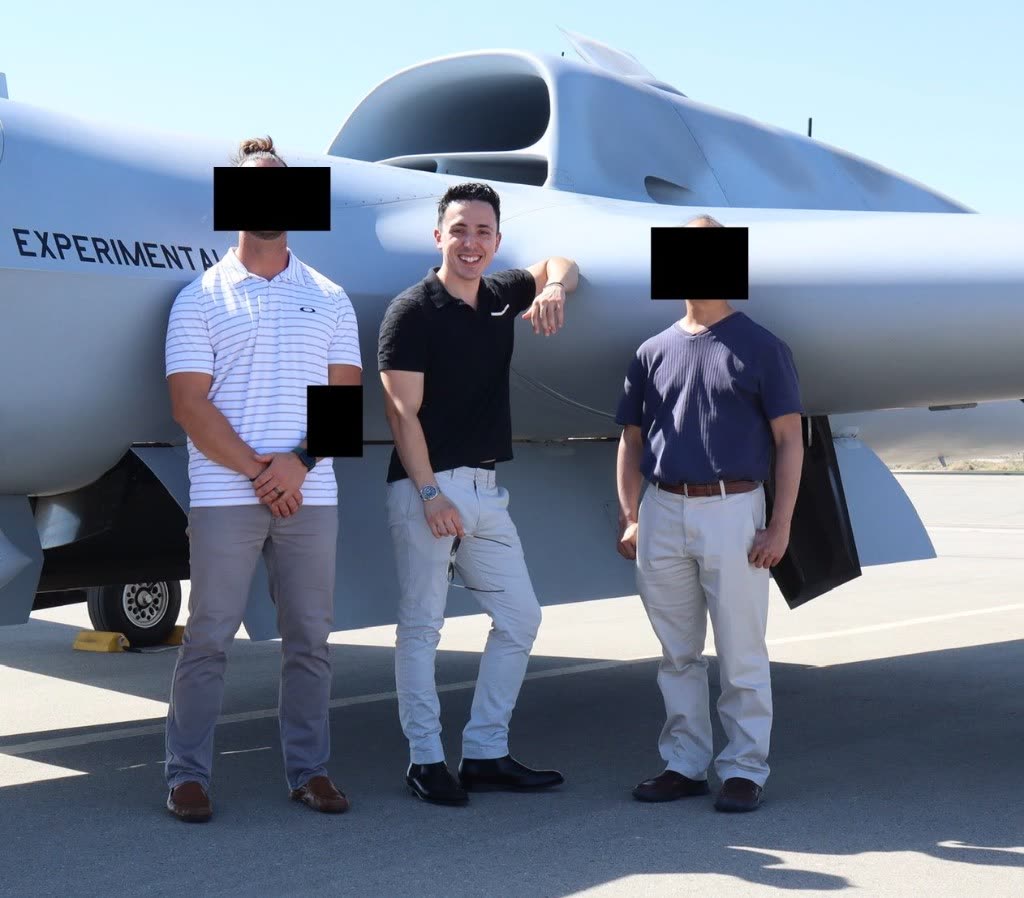
Before Graylark, I worked for defense contractors on applied AI programs supporting DARPA and the U.S. Army. The work included embedded autonomy, navigation in GPS-denied environments, mission planning, and other problems where software had to interpret the physical world and produce useful decisions under real constraints.
That environment taught me to respect hard technical problems.
You begin with the literature. You break an ambitious objective into tractable research questions. You define what success would mean, build an experiment, measure the result, study the failures, and iterate. Progress is earned through evidence rather than presentation.
It also showed me a recurring gap. Research can establish that something is possible without establishing a path into the hands of the person who needs it. A strong paper, prototype, or program demonstration may still have no usable interface, no operational workflow, and no mechanism for learning from real users after the evaluation ends.
Silicon Valley offered a different discipline: build quickly, put an imperfect prototype in front of users, and let reality challenge the assumptions. Talk to customers before the architecture hardens. Watch what they do rather than relying only on what they say. Shorten the distance between an idea and the evidence that should either strengthen it or kill it.
Each tradition corrects a weakness in the other.
Research rigor keeps rapid prototyping from becoming a sequence of shallow demos. Customer contact keeps research from drifting toward elegant problems that nobody urgently needs solved. Product velocity reduces the time between a technical hypothesis and a real-world test. Measurement prevents enthusiasm from being mistaken for performance.
Graylark was built to combine all four.
Research starts with a field problem
At Graylark, the best research questions frequently arrive in ordinary conversations.
An investigator may not ask for a new embedding model, retrieval architecture, or evaluation strategy. They describe what they cannot do:
- “This is the only frame we have. Can you tell us where it was taken?”
- “We can see part of a vehicle, but not enough to identify it manually.”
- “The image may be synthetic. How do we know whether to trust it?”
- “We have too much media to review and too little time to find the useful frames.”
The customer contributes the problem, its context, and the definition of usefulness. Our job is to translate that into a research program.
That distinction matters. Being in service of customers does not mean accepting every feature request or becoming a custom-development shop. Customers are experts in the conditions of their work. They reveal constraints that are easy to miss from a lab: the quality of the source media, the time available, the evidence required for corroboration, the mistakes that are tolerable, and the ones that are not.
We look for the general capability inside the specific request. If the same gap appears across investigations, agencies, or workflows, it may point toward a system worth building.
The roadmap is therefore neither purely top-down nor purely reactive. We maintain a long-term technical view of how visual intelligence should work, then use contact with the field to decide which parts of that future need to exist now.
Papers are starting points
Research papers compress years of insight into something another team can test. We read them constantly. They give us baselines, new representations, evaluation methods, and ideas that can be recombined in ways the original authors did not intend.
But a paper is not a product specification.
Academic work is usually optimized to answer a bounded question under a defined dataset and metric. Operational media rarely respects those boundaries. A benchmark image may be clean and correctly framed; the image in a case may be a compressed screenshot from a livestream, filmed at night, partially obstructed, stripped of metadata, and taken somewhere that is poorly represented in existing datasets.
So reading the paper is the beginning of the work. We reproduce what matters, test the assumptions, change the data, introduce harder negatives, and determine whether the idea survives outside its original evaluation setting.
Sometimes it does. Sometimes an approach that looks exceptional on a benchmark collapses under temporal change, different sources, limited coverage, or the strange distribution of real customer imagery. Both outcomes are useful. The point of an experiment is not to protect the idea. It is to learn whether the idea deserves another iteration.
This is the part of research culture we preserve most aggressively: claims should trace back to evidence, failures should become future test cases, and a result should become more difficult to fool over time.
A prototype is a question
We prototype quickly because speed increases the number of important questions we can answer.
A prototype can tell us whether a research direction has signal, whether the data is sufficient, whether latency is compatible with the workflow, and whether an operator understands the output. It can reveal that the difficult part is not where we expected it to be.
The first version should therefore be as small as possible while still testing the core assumption.
That may be a notebook, a crude search interface, a single model behind an upload box, or a narrowly scoped dataset. We are comfortable showing early work internally and to trusted users because polished isolation is dangerous: a team can spend months improving something whose output is irrelevant, misunderstood, or impossible to incorporate into the customer's workflow.
Speed, however, does not change what a prototype is.
A prototype is evidence about possibility. It is not evidence of reliability, scale, coverage, security, or operational readiness. Those require additional stages of testing and product work.
One of our internal disciplines is to keep those labels honest. We can move extremely fast at the research edge while remaining deliberate about what we call a product capability.
A paper establishes an idea. A prototype exposes the unknowns. A product earns trust.
Customers turn demonstrations into systems
GeoSpy began as a two-week experiment. We built it after reading research on machine learning for geographic reasoning, then released a simple public demonstration. It reached one million cumulative users in its first three months.
The traffic was exciting. The conversations mattered more.
Investigators were using GeoSpy on images with no GPS, no obvious landmark, and very little context. Their feedback changed the technical and product requirements. A city-level estimate was useful, but they needed to narrow it. A single answer was easy to read, but they needed alternatives they could compare and corroborate. A standalone demo proved a capability, but they needed a workflow.
That feedback did not merely produce a longer feature list. It changed the research agenda.
The same pattern led to vehicle identification. During a conversation with investigators, someone asked whether we could identify a vehicle from a partial or difficult view: an interior, a body panel, a headrest, or a blurry exterior frame. We turned the question into an experiment, tested it, and eventually developed it into a Raven capability.
This is what we mean by a research lab in service of its customers. We stay close enough to the work that a practical constraint can become a research question, and close enough to the research that a technical breakthrough can become a usable system.
The loop is continuous:
- Observe a consequential problem in the field.
- Translate it into a testable research question.
- Study the literature and establish a baseline.
- Build the smallest prototype that can challenge the assumption.
- Put it in front of people who understand the problem.
- Turn failures and feedback into benchmarks.
- Productize only after the capability clears the necessary evidence gates.
- Learn from real use and begin the next iteration.
The customer is not waiting at the end of the process. They are part of the learning system throughout it.
- Field problem
- Research question
- Prototype
- User test
- Benchmark
- Product
- Field learning
Product design is part of the research
There is a persistent mistake in AI: treating product design as the wrapper placed around a model after the serious work is finished.
We see it differently. Product design determines whether the capability can be understood, tested, and used responsibly. In that sense, design is part of the research.
A model may return several plausible locations. The system has to determine how candidates are generated and ranked. The product has to decide what context accompanies them, how a score is labeled, how an operator compares alternatives, and how the final review is recorded. Those choices affect whether the system improves judgment or merely projects confidence.
The researcher asks, “Can the system produce a useful signal?”
The product designer asks, “Can the user understand what that signal means, what it does not mean, and what to do next?”
Both questions are technical. Both affect real-world performance.
Product design is not the wrapper placed around the research. It is part of the research.
This is why Graylark pairs advanced AI research with product design from the beginning. Researchers, engineers, designers, and operators should not work in a relay race where each team receives a finished artifact from the last. They should shape the system together.
The ideal product makes sophisticated technology feel direct without hiding its uncertainty. It reduces the number of decisions an operator has to make while preserving the decisions that belong to the operator. It makes the fast path obvious, failure visible, and corroboration easier.
Beautiful software matters, especially in consequential work. Clarity is not decoration. It is part of correctness.
Move fast in the lab. Be deliberate in the field
“Move fast” can sound incompatible with work for law enforcement, government, and other high-consequence customers. It is only incompatible when speed is applied indiscriminately.
We separate research velocity from deployment standards.
Inside the lab, we want short loops. Run the experiment. Break the model. Change the data. Compare approaches. Discard weak ideas without ceremony. Let researchers pursue a promising side question before its commercial value is obvious.
At the point of use, the standard changes. Results need context. Scores need accurate labels. Coverage and limitations need to be understood. Sensitive data needs deliberate handling. The operator needs to remain responsible for the final judgment. A capability should be tested on representative inputs rather than supported only by its best examples.
Moving quickly in research makes this discipline more achievable, not less. More iterations create more opportunities to find failure modes before they reach the field. Faster prototypes make it cheaper to reject the wrong direction. Close customer contact reveals consequences that a benchmark cannot.
Our rule is simple:
Move fast where failure creates learning. Be deliberate where failure creates consequences.
Build platforms from repeated needs
Customer-driven research can easily turn into a collection of disconnected features. That is not our goal.
The recurring pattern behind Graylark's work is fragmented evidence from the physical world. A photograph, video frame, vehicle fragment, property interior, or authenticity signal may contain something important, but conventional search systems do not know how to resolve it.
The long-term technical question is larger than any one model: how can machines make the physical world searchable?
Raven is the first system built around that question. Its capabilities can locate scenes, identify vehicles, and assess visual authenticity from low-context imagery. The individual models matter, but their value compounds when they operate inside one reviewable investigation rather than as isolated demonstrations.
That platform view helps us decide what to build. A promising experiment must eventually connect to the larger system: shared inputs, consistent results, human review, and an evidence workflow. We are not trying to accumulate an AI feature for every possible question. We are building reusable intelligence infrastructure from the problems that matter repeatedly.
The discipline is deciding which customer request reveals a missing piece of that system, which belongs in a limited experiment, and which should not be built.
Research, deployed
Graylark exists because we believe advanced research should reach the people who need it.
Defense R&D taught us to respect the depth of hard technical problems. Silicon Valley taught us to put ideas in contact with reality quickly. Our customers teach us which constraints matter in the field. Product design turns the resulting capability into something an operator can understand and trust.
Remove any one of those elements and the system becomes weaker.
Research without users can solve the wrong problem. Customer development without research can produce shallow software around existing capabilities. Speed without measurement produces demos. Technical performance without product design produces tools that remain trapped in the lab.
Graylark is our attempt to hold the entire chain together: find the hard problem, advance what is possible, build quickly, measure honestly, design carefully, and deploy responsibly.
That is what we mean when we call ourselves an applied AI research lab.
We are a research lab in service of our customers—and the systems we build are how the research reaches the field.
Read why we built GeoSpy and why it became Raven, explore Raven's visual intelligence capabilities, or book a demonstration using representative imagery from your organization.
See Raven run on your own imagery.
Raven is available to verified agencies and investigative teams.